
Speed to Market: Rethinking the Path to Large Volume Subcutaneous Delivery
As pharmaceutical companies explore subcutaneous (SC) delivery for biologic therapies, interest continues to grow in approaches that can offer an alternative to traditional intravenous (IV) administration. Multiple studies have found a clear patient preference for subcutaneous administration over intravenous delivery. ¹
As companies evaluate opportunities to bring these treatment options forward, development teams face decisions around formulation, container closure, and delivery technology. Each of these decisions can influence the timeline of combination product development, making the path from development to commercialization an important consideration from the start.
The Concentration Challenge
For some therapies, transitioning biologics historically developed for IV administration to SC delivery can require formulation changes to achieve a lower injection volume. Instead of asking how to fit a drug into a smaller volume, what if the delivery technology could accommodate the formulation without requiring a smaller volume?
Higher-concentration formulations are often pursued because reducing the volume can potentially allow for administration through devices such as autoinjectors. However, there are challenges associated with concentrating biologics, including stability, subvisible particles, viscosity, pH, osmolality, and tonicity. ²
For development teams, this can make it more difficult to achieve a concentration fit for SC administration while keeping the characteristics of the original drug product. Additional formulation work can add time, development costs, and complexity to development, potentially affecting how quickly an SC treatment option can reach patients.
When Volume Becomes an Advantage
Large volume SC delivery offers another approach. Rather than reformulating a drug to accommodate a smaller-volume target, delivery technology capable of accommodating larger volumes can provide greater flexibility around formulation.
In a recent article by Desai et al., 90.9% of surveyed drug development experts reported having been directly involved in SC programs that were deprioritized or abandoned because they couldn’t meet the small volume target, with respondents involved in an average of four of these programs. ³ These findings highlight how perceived volume limits can shape development decisions before large-volume delivery options are considered.
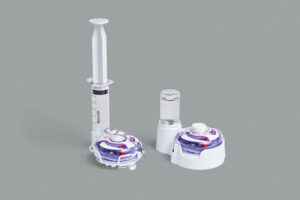
The enFuse® On-Body Delivery System was designed to deliver 5-25mL and a range of viscosities while using the original container closure. ² This flexibility can allow the delivery approach to accommodate the drug formulation, rather than the formulation fitting the device.
Building Flexibility into Development
Flexibility can extend beyond volume and viscosity. Platform-based technologies can use an established structure that can be leveraged across drug products, potentially simplifying development while allowing the delivery experience to be tailored to a therapy’s needs.
This type of approach can also support earlier clinical evaluation. The enFuse platform is capable of producing clinical devices within three to six months for perspective partners. and. This provides pharmaceutical companies with the ability to generate data earlier in the development process that cannot be accomplished with other custom delivery devices.
In specific, the enFuse® Syringe Transfer (ST) System can further support flexibility during early clinical development by allowing multiple dose volumes to be studied in a single trial still using the same injector. This completely changes the paradigm for device utilization in the drug development process. The pharmaceutical company now has the ability to utilize the to-be-commercialized delivery device as early as a Phase 1 study. This approach can support efficient clinical evaluation and help maintain momentum toward commercialization.
Containers Matter Too
Formulation and delivery technology are only just one part of the equation. The primary container closure system (CCS) can also influence development timelines. Introducing a new container or packaging configuration may add compatibility and stability testing to an already complex development process.
In a survey of industry experts by Desai et al., 81% reported challenges with primary CCS qualification and validation can delay clinical trials and commercial launch. ⁴
The enFuse system takes a different approach by using the drug’s original container closure such as a vial, rather than transferring it to a prefilled container. This can leverage existing shelf-life data and potentially avoid additional development steps that come with a new CCS, with research identifying benefits of time, direct cost, and risk. ⁴
Details Matter to the Timeline
Speed to market is rarely determined by a single decision. Formulation, packaging, device selection, and combination product development can all add up when it comes to the path of commercialization.
The chosen SC delivery method can also impact development timelines, costs, and commercial uptake. ² By considering formulation, container closure, and delivery technology together from the start, pharmaceutical companies may be able to reduce potential complexity and create a more streamlined path toward commercialization.
Ultimately, flexibility in development is more than just efficiency. By considering the drug, device, and development pathway together, it can support the broader goal of bringing SC treatments options to patients quicker while enabling a more flexible approach to treatment administration.
- Stoner KL, Harder H, Fallowfield LJ, Jenkins VA. Intravenous versus subcutaneous drug administration. Which do patients prefer? A systematic review. Patient. 2015;8(2):145-153.
- Desai M. Reduce pharma development time through large-volume subcutaneous delivery with the enFuse®. ONdrugDelivery. 2023;(142):38-41.
- Desai M, Rahman O, Bittner B, Chen W, Koobatian M, Rajagopalan D. Insights from drug development: surveying challenges and outcomes for large-volume subcutaneous drugs. Presented at: AACR Annual Meeting; April 2025; Chicago, IL.
- Desai M, Waites D, Rich W, Laurence L, Ingawale S, DeGrazio F. Economic advantages of original container closure systems in combination product development: scenarios with expert validation and industry-quantified cost-time savings. PDA J Pharm Sci Technol. 2025;79(5):525-540. doi:10.5731/pdajpst.2025-000002.